
Welding Away the Corrosion Budget: Five Clauses Missing from Most Stainless Steel POs
Week of 10–14 November 2026 — a Q1 2027 specification guide for technical buyers
The market in one page
Nickel did what nickel does when a policy headline arrives without a number. LME three-month nickel averaged USD 16,230/t for the week to 14 November, down 0.3% week-on-week, after touching a six-week high above USD 16,000 on expectations that Indonesia will set 2027 RKAB ore quotas below the 295–300 million wet tonne level revised for 2026. It settled at USD 16,215/t on 12 November, then slipped to USD 15,905/t the following day when the quota detail failed to materialise. LME stocks at 271,632 t remain historically high and the cash-to-three-month spread is still inverted at roughly minus USD 190/t. The physical market is not tight; the paper market is pricing an option.
Two cost lines moved in opposite directions. Ferrochrome in Inner Mongolia held at RMB 7,300–7,600 per 50-base-tonne and remains the input that is quietly falling, with chrome ore at Tianjin Port steady at RMB 48–49 per dry tonne unit. Molybdenum went the other way: European moly oxide reached USD 34.25–35.50/lb Mo on 13 November, a 2026 high and roughly 57% above the January open, with European ferromoly at USD 80.8–81.5/kg Mo, up about 55% year-to-date.
| Indicator (week to 14 Nov 2026) | Level | Change |
|---|---|---|
| LME nickel, 3-month | USD 16,215/t (12 Nov) | −1.0% w/w |
| LME nickel stocks | 271,632 t | −756 t |
| SHFE stainless SS2701 | RMB 13,930/t | −0.5% |
| Wuxi 304 cold-rolled, private base | RMB 13,800/t | flat |
| Wuxi 304 hot-rolled 4.0 mm | RMB 13,650/t | −100 |
| High-carbon ferrochrome, Inner Mongolia | RMB 7,300–7,600/50 base t | weak |
| NPI, delivered | RMB 1,030–1,050/Ni unit | flat |
| Moly oxide, Europe | USD 34.25–35.50/lb Mo | 2026 high |
| Drewry WCI composite | USD 4,305/FEU | −2% |
| Shanghai–Rotterdam | USD 3,504/FEU | −3% |
Molybdenum does not stop at the plate
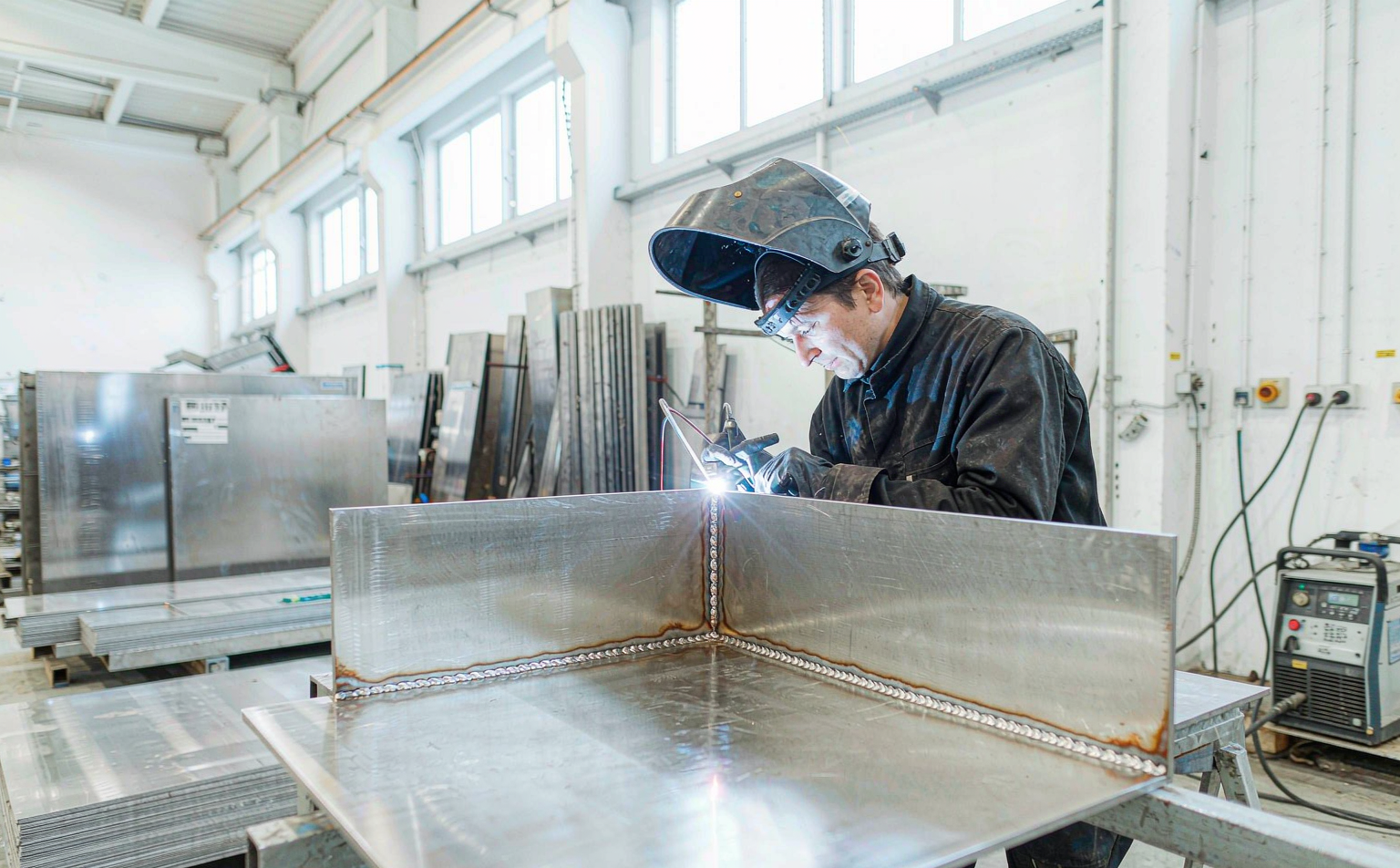
A 316L purchase order is priced against the plate. The welding that joins that plate is priced against the same alloy — and buyers rarely look at it.
ER316L filler contains roughly 2.5% molybdenum and 12% nickel. At USD 80.8/kg Mo for European ferromoly, the molybdenum alone in one kilogram of ER316L wire costs about USD 2.00, before nickel, chromium, drawing, spooling and certification. ER2209 for duplex 2205 carries 3.0–3.5% Mo plus 0.15% nitrogen and is more expensive again. When moly rises 57% in ten months, the consumables line on a fabrication quote moves with it — and it is the line most often "optimised" by a subcontractor without telling anyone.
The arithmetic that should end the argument
Take a 6 mm fillet weld. The cross-section is 18 mm², so one metre of joint holds 18 cm³ of weld metal. At 7.9 g/cm³ that is 142 g deposited, or roughly 0.15 kg of filler per metre after deposition losses.
Substituting ER308L for ER316L saves the molybdenum and part of the nickel — about USD 2.30 per kilogram of wire. On one metre of 6 mm fillet, that is USD 0.35. Across a thousand metres of joint, USD 350. Against that, a single cut-out and re-weld of one defective joint, plus re-pickling, re-inspection and schedule recovery, costs several times the entire saving.
The conclusion is uncomfortable but robust: on any fabricated stainless assembly, filler metal is a low single-digit percentage of installed cost. Labour, fit-up, inspection and surface restoration dominate. Downgrading consumables is not cost engineering; it is a transfer of risk to the end user, at a discount of less than 1% of project value.
Five clauses that are usually missing
1. Filler grade, stated as a standard, not a brand. "Matching filler" is not a specification. Write ER308L per AWS A5.9 for 304/304L, ER316L for 316L, ER2209 for 2205, and ER309L for stainless-to-carbon dissimilar joints. Note that low-carbon fillers exist precisely because the weld metal cannot be solution-annealed after fabrication — the base metal's 0.03% carbon limit does not protect the joint on its own.
2. Heat input and interpass temperature, in numbers. For austenitic grades, 0.5–1.5 kJ/mm with interpass ≤150 °C. For 2205, 0.5–2.0 kJ/mm with interpass ≤150 °C and a ferrite balance of 35–55% in both weld metal and heat-affected zone. Duplex is the grade that punishes guesswork hardest: too much heat and the austenite never reforms, too little and the ferrite dominates. Both outcomes leave a joint that passes a hydrotest and fails in service.
3. Heat tint removal, as a hold point. The straw-to-blue oxide left by welding sits on a chromium-depleted layer. It is not cosmetic. Specify pickling and passivation to ASTM A380 and verification to ASTM A967, and make it a witness point before hydrotest. On hygienic and pharmaceutical service this is non-negotiable; on architectural work it is what separates a five-year facade from a twenty-year one.
4. Consumable lot traceability to the joint. Filler certificates are routinely filed and rarely linked. Ask for a weld map that ties each heat number to the consumable lot, the welder qualification and the NDT record. This is inexpensive at the fabrication stage and effectively impossible to reconstruct afterwards.
5. Shop priming and contamination control. Carbon steel grinding dust embedded in stainless is the most common cause of "mystery" rust on a new asset. Require dedicated stainless tooling, separate storage, and no carbon steel wire brushes anywhere near the assembly.
The policy reason this now matters more
From 1 October 2026, EU origin for steel is determined by where the steel was first melted and poured — not where it was rolled, cut or welded. A buyer who plans to ship Chinese slab to a third country, fabricate there and re-export into the EU gains nothing: the material still consumes the melting country's quota, and the out-of-quota duty is 50% against a tariff-rate quota pool cut 47% to 18.3 million tonnes. From 1 October 2027, mill test certificates and heat numbers become mandatory customs documents. A fabrication shop that cannot produce heat-number-linked weld records will not be able to support its customer's EU clearance, however good the weld is.
What to put in the RFQ this quarter
- Filler grade to AWS A5.9 (or EN ISO 14343), with lot certificates supplied before shipment
- Heat input, interpass temperature and, for duplex, ferrite acceptance criteria
- Pickling and passivation standard, with photographic record of heat tint removal
- Weld map linking heat number, consumable lot, welder ID and NDT result
- Welder qualification to EN ISO 9606-1 or ASME IX, certificates in the document pack
- Consumption allowance stated per metre of joint type, so the filler line is priced openly rather than buried
Nickel at USD 16,200/t and ferrochrome drifting lower mean the base metal side of Q1 2027 is, for now, a range-trading problem. Molybdenum at a 2026 high is not. It is a specification problem — and it is decided by the welding procedure, months before the first coil is rolled.
📞 Contact FSGood Steel immediately to obtain a quote or technical consultation:
📧 Email – jason@fsgoodsteel.com
📱 Phone – +86 18370137709
💬 WhatsApp - +86 18007093101
🌐 Website – www.fsgoodsteel.com