
Stainless Steel Coil Inventory Planning for Fabricators: Safety Stock, Call-Off Schedules and Metal Price Risk
Stainless Steel Coil Inventory Planning for Fabricators: Safety Stock, Call-Off Schedules and Metal Price Risk
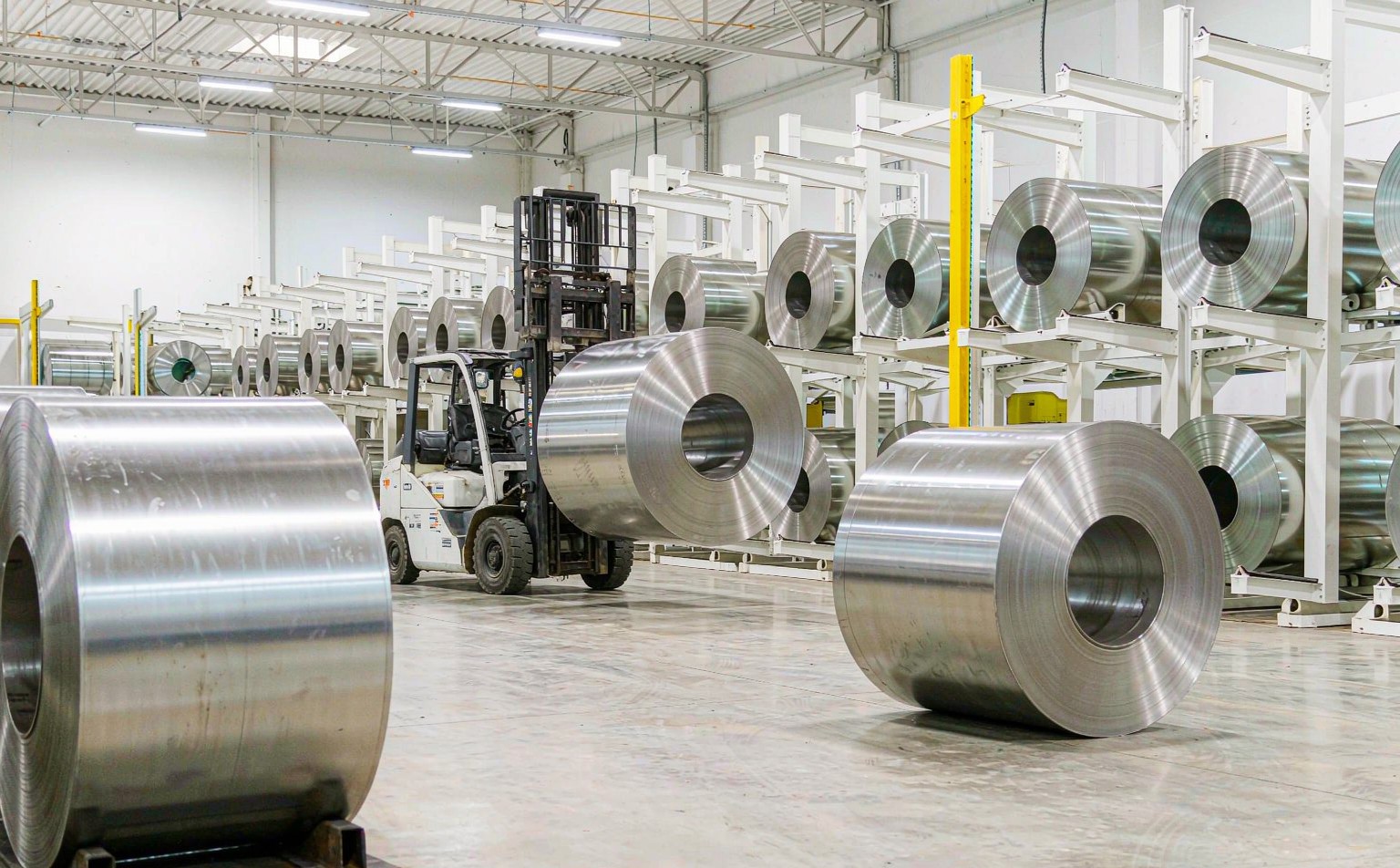
Fabricators usually lose money on stainless steel coil twice. The first loss is visible: a job is scheduled, the coil is not there, and an emergency spot purchase lands at the worst possible moment in the price cycle. The second loss is quieter: capital sits in pallets of material nobody has called off, the alloy surcharge moves against you while the coils wait, and the protective film ages past its adhesion life. Both losses come from the same root cause - inventory that was planned around purchase price instead of around consumption.
This guide is written for fabrication businesses that buy stainless steel coil regularly and want a simple, defensible planning method: how much to hold, how to schedule deliveries, and how to think about the metal price risk that is embedded in every coil sitting on a rack.
What holding coil actually costs
Before deciding how much to hold, it helps to be honest about what holding costs. The visible costs - warehouse space and handling - are usually the smallest ones.
| Cost element | How it shows up | Typical driver |
|---|---|---|
| Capital tied up | Cash flow, financing cost, reduced flexibility for other purchases | Alloy content makes stainless capital-intensive per ton |
| Metal price movement | Stock bought at a surcharge peak loses value while it waits | Nickel and molybdenum reference prices |
| Surface ageing | Film adhesive hardens, discoloration, handling marks accumulate | Storage time, humidity, temperature |
| Obsolescence | Odd widths and finishes that no current job consumes | SKU proliferation over the years |
| Space and handling | Rack space, forklift time, extra movement damage | Volume and storage method |
As a planning rule, many fabricators work with a carrying cost in the range of 1.5 to 3 percent of stock value per month once capital and price exposure are included. The exact number matters less than acknowledging that a coil in the warehouse is not neutral - it is a position in the metal market with a running cost.
Sizing safety stock without guesswork
Safety stock exists to cover the gap between what you planned and what actually happened: demand that ran hotter than forecast, or a shipment that arrived later than promised. Both variables matter, and they multiply.
A workable method for a fabrication business does not need statistics software. For each coil SKU group - typically grade and finish matter more than exact width - keep three numbers:
- Average weekly consumption, measured over the last two or three months, not estimated.
- Replenishment lead time - from order confirmation to material available at your plant, including sea freight if you import.
- Worst realistic deviation - the biggest demand spike or delivery delay you have actually experienced in the last year.
A practical starting point: hold safety stock equal to roughly half of the worst realistic deviation, expressed in weeks of consumption. If your busiest month ran fifty percent above average and your supplier lead time is eight weeks, that points to roughly four weeks of extra cover on critical SKUs - more on the ones that stop your line, less on the ones that do not.
| Coil group | Avg weekly use | Lead time | Worst deviation | Safety stock | Reorder point |
|---|---|---|---|---|---|
| 304 2B, 1.0-1.5 mm | 6 t | 8 weeks | +50% demand | ~4 weeks = 24 t | 72 t (8 weeks) + 24 t |
| 304 2B, 2.0-3.0 mm | 3 t | 8 weeks | +30% demand | ~2 weeks = 6 t | 24 t + 6 t |
| 316L 2B, 1.5 mm | 1.5 t | 10 weeks | +60% demand | ~4 weeks = 6 t | 15 t + 6 t |
The table is illustrative - replace the inputs with your own numbers and review them quarterly. What matters is that the reorder point, not gut feeling, triggers the purchase order.
Minimum order quantities and the SKU trap
Safety stock arithmetic collides with a hard commercial fact: mills and service centers sell in minimum order quantities, and a full mother coil rarely matches one SKU. The result, over a few years, is a warehouse full of quarter-used coils in near-identical grades and widths.
Two habits fix most of it. First, rationalize widths before negotiating prices: a fabricator running four standard widths with planned trim allowance usually consumes more efficiently than one running ten "perfect" widths, because partial coils get used up instead of shelved. Second, buy multi-slit orders - one mother coil slit into two or three working widths in a single processing instruction - instead of separate minimum orders per width. The unit price per slit width is usually competitive, and the residual stock is one coil instead of three.
Call-off schedules and framework orders: sharing the risk deliberately
For steady consumers, a framework order with call-offs is usually better than a series of one-off purchases. The structure matters more than the discount:
- Total quantity fixed, deliveries scheduled. You commit to an annual tonnage and call off against a rolling schedule. The supplier gets planning security and prices accordingly; you get priority on allocation when mills are tight.
- Fixed call-off window. Agree how many days or weeks ahead a call-off becomes binding. A 30-day firm window with 60 and 90-day forecast bands is a common and workable pattern.
- An explicit price mechanism. Decide whether the surcharge is fixed per call-off, fixed per quarter, or floats with the reference period. This single clause determines how much of the metal price risk you are actually carrying - the same clause discussed in coil pricing itself, now applied to your schedule.
- Quantity tolerance per call-off. Production reality means call-offs are rarely exact. Agree a tolerance band, for example plus or minus ten percent per release, instead of renegotiating each one.
Suppliers can plan around a known schedule; they cannot plan around fifteen urgent e-mails. Fabricators who move to structured call-offs typically find that lead-time reliability improves before any price concession does - and reliability is what safety stock is really insuring against.
The metal price inside your warehouse
Every coil on your rack is a position in nickel. Whether that position is deliberate or accidental is the difference between treasury management and drift.
Three practical postures exist, and each fits a different business situation:
- Buy hand-to-mouth. Minimum cover, replenish at the reorder point. Lowest capital and price exposure, highest dependence on supplier reliability. Works when lead times are short and demand is stable.
- Buy ahead strategically. When the alloy surcharge is in a defined low phase and your own order book is visible for a quarter, adding one extra month of cover converts a market view into margin. Keep it occasional and sized - one month of consumption, not six.
- Fix the mechanism instead of the price. A fixed-surcharge framework converts your warehouse position from a bet into a cost. You pay a small premium at signature and stop watching the nickel chart.
What rarely pays is the unconscious version: stock accumulating because reorder points were never defined. That is a market position nobody decided to take.
Five numbers worth tracking
| KPI | Definition | What it tells you |
|---|---|---|
| Weeks of cover | Total stock divided by average weekly consumption | Whether you are drifting toward overstock, SKU by SKU |
| Inventory turns | Annual consumption divided by average stock value | Capital efficiency; 6-8+ turns is common for healthy fabricators |
| Stockout rate | Production days delayed by missing material / total production days | Whether safety stock is actually sized to the real deviations |
| Emergency purchase share | Tonnes bought at spot against need / total tonnes | How often the market, not your plan, sets your price |
| Dead stock share | Stock untouched for 6+ months / total stock value | The SKU trap, measured in money |
Reviewing these five numbers once a quarter takes an hour and catches most problems while they are still cheap - including the quiet ones like film ageing on coils that should have been consumed months ago.
Frequently asked questions
How many weeks of cover should a fabricator hold?
Enough to cover replenishment lead time plus a safety buffer sized on your worst realistic deviation - commonly three to six weeks of cover for imported material with eight-week lead times, less for local supply. Holding more than that should be a deliberate decision, not an accumulation.
Is it worth buying extra coil when the surcharge is low?
Occasionally and modestly, yes. One extra month of consumption bought in a defined surcharge low is a reasonable position. Six months is speculation, and it adds carrying cost, film ageing and grade-obsolescence risk on top of the price view.
What is the difference between a framework order and a blanket purchase order?
Terms vary by supplier, but typically a framework order fixes commercial terms and tonnage with call-offs over a period, while a blanket PO is a single price agreement drawn down over time. The important part is the same in both: a defined call-off window, a defined price mechanism and a quantity tolerance.
Does holding stainless coil expose us to nickel prices?
Yes, through the alloy surcharge paid on the material sitting in stock. If you hold six weeks of cover, your stock position moves with the reference price over those weeks. A fixed-surcharge agreement or shorter cover shrinks that exposure deliberately.
How do we stop dead stock from building up?
Limit SKU count, prefer multi-slit orders over extra widths, and review the dead stock share quarterly. Material untouched for six months should be consumed by design - allocated to a suitable job - or worked into the next purchase plan, not forgotten on a rack.
Send us your consumption by grade and width, your current lead times and your last twelve months of purchase volumes. We will help you structure a framework with realistic call-off windows and a surcharge mechanism that matches how you actually run production - and we will tell you honestly if your volumes are better served by stock releases from our warehouse than by mill orders of your own.
📞 Contact FSGood Steel immediately to obtain a quote or technical consultation:
📧 Email – jason@fsgoodsteel.com
📱 Phone – +86 18370137709
💬 WhatsApp - +86 18007093101
🌐 Website – www.fsgoodsteel.com