
Aluminum Foam Panels for Stainless Steel Doors and Cabinets: Sound Absorption, Fire Performance and B2B Sourcing Guide
Jason | Goodsteel Technical Analysis Department
If you specify stainless steel doors or cabinet systems for projects where noise, fire codes or weight are decisive, the material inside the panel deserves as much attention as the skin. Aluminum foam — a porous metallic material that is mostly air by volume — has moved out of niche aerospace use and into construction, transport and industrial equipment. Paired with a 304 or 316 stainless steel skin, it offers a combination that no solid plate or polymer foam can match: genuine metal-grade fire performance, real sound absorption, and only a fraction of the weight.
Here is our practical guide for buyers and engineers evaluating aluminum foam panels in 2026.
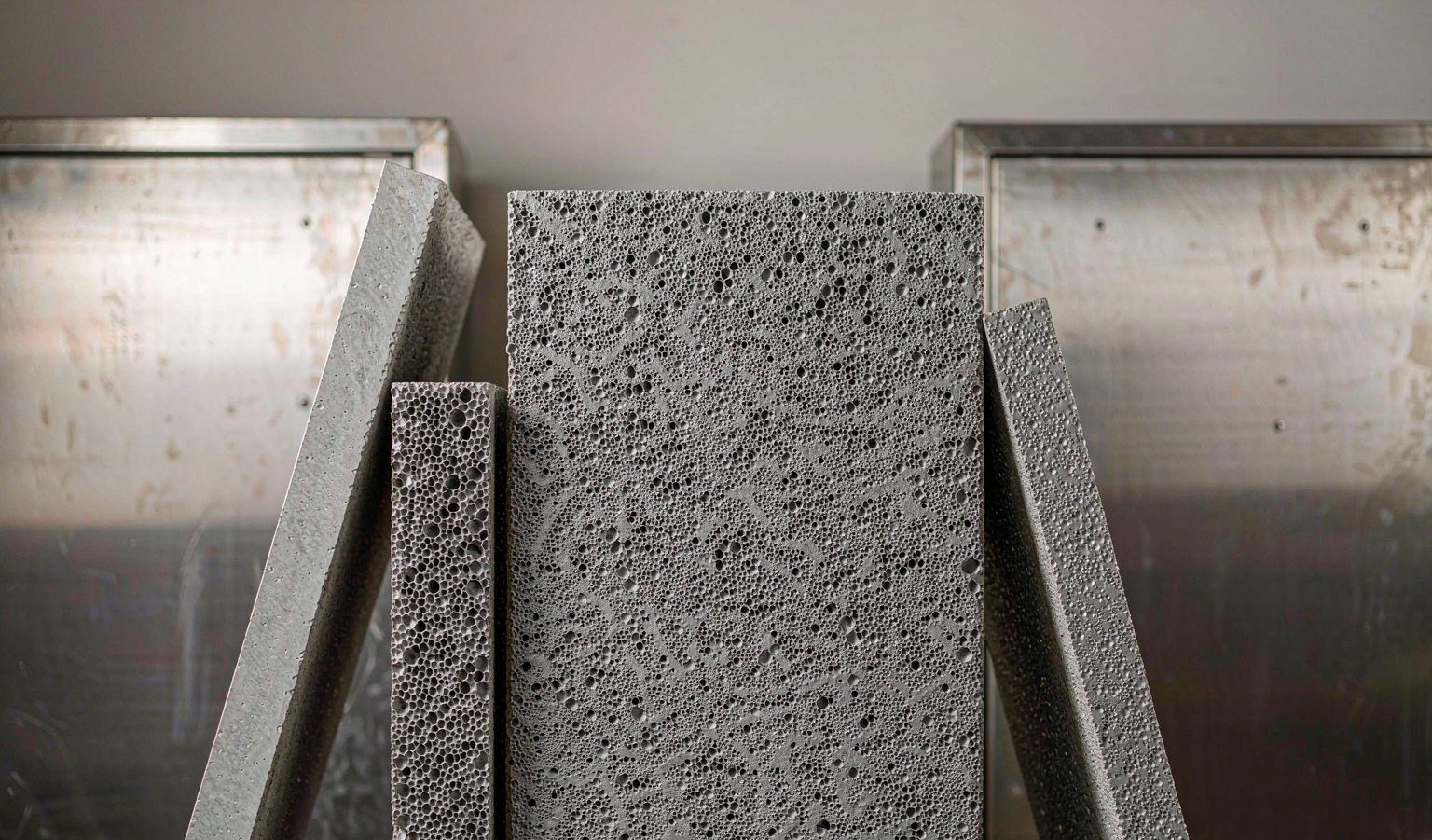
1. What Aluminum Foam Actually Is
Aluminum foam is made by introducing a gas-releasing foaming agent (typically titanium hydride) into molten aluminum, or by powder metallurgy, so the solid metal sets around millions of pores. The result is a metallic honeycomb that is roughly 70–90% air by volume — light enough to float, yet stiff enough to carry load.
Two cell structures exist, and they behave very differently:
- Closed-cell foam — each pore is sealed. It is the choice for structural stiffness, impact energy absorption and moisture resistance, and accounts for roughly 61% of structure-segment demand.
- Open-cell foam — the pores (0.5–1.0 mm) are interconnected, so air can pass through the panel. That is exactly what makes it an efficient sound absorber and a useful heat-exchange medium.
Typical commercial ranges: density 0.25–0.85 g/cm³, porosity 68–91%, main pore size 5–10 mm (0.5–1.0 mm for open cell), panel thickness from about 6 mm to 300 mm, and standard panel sizes of 500×500, 600×600, 1000×500 and 1200×600 mm, with 2400×800 mm as a common maximum. Special shapes are generally available on request.
2. The Numbers That Matter
| Property | Typical range |
|---|---|
| Density | 0.25–0.85 g/cm³ (construction grades usually 0.27–0.50) |
| Porosity | 68–91% |
| Fire classification | A1 non-combustible (GB 8624, tested per GB/T 5464; same A1 class under EN 13501-1) |
| Sound absorption (open cell) | NRC ≥ 0.75; 40–80% absorption at 1000–2000 Hz |
| Sound insulation | Rw ≈ 28 dB for an 8 mm panel + 100 mm air cavity + 0.5 mm steel backing |
| Thermal conductivity | 0.25–0.62 W/m·K |
| Moisture absorption | ≈ 0.00% (closed cell) |
| EM shielding | 40–55 dB across 80 kHz–1.5 GHz |
| Compressive strength | 3–4 MPa at 0.25–0.30 g/cm³, rising to 20+ MPa near 0.80 g/cm³ |
| Recyclability | 100% recyclable, non-toxic |
Three of these deserve comment.
Fire. Aluminum foam does not burn, drip or release the smoke loads associated with polymer cores, and it survives the same A1 classification under both Chinese GB and European EN test regimes. For fire-rated door assemblies this is the headline argument.
Acoustics. Open-cell foam absorbs sound twice: the interconnected pores dissipate acoustic energy as the air is forced through them, and the mass of the metal skin blocks transmission. In practice, the absorption peak sits in the speech-frequency band (1000–2000 Hz), which is why metro barriers, generator rooms and commercial kitchens specify it.
Weight versus strength. Compressive strength scales with density: roughly 3–4 MPa at 0.25–0.30 g/cm³, and more than 20 MPa near 0.80 g/cm³. A foam-cored panel therefore delivers stiffness close to a solid plate at a fraction of the mass — which matters for large door leaves, sliding systems and transport applications.
3. Where It Fits in Doors and Cabinets
- Door leaves. A foam core between two stainless steel skins gives a lighter leaf that is easier on hinges and operators, adds acoustic damping, and supports fire-rated assemblies — a natural fit for entrance doors, apartment and hotel doors, and technical room doors.
- Cabinet and enclosure panels. In commercial kitchens, equipment cabinets and cleanroom systems, the core reduces drumming and vibration of large flat panels and acts as a thermal break that limits condensation on the inner face.
- Sandwich panels. Stainless steel + aluminum foam + stainless steel is an established construction for facades, machine enclosures and partitions where fire, weight and acoustics all matter at once.
- Noise barriers. Highway, metro and equipment-room barriers use open-cell foam panels for their broadband absorption and all-weather durability.
4. Five Things Buyers Get Wrong
1) Ordering the wrong cell structure. Closed-cell foam is a poor sound absorber; open-cell foam is the wrong choice where moisture sealing and impact energy matter. Specify the function first, the material second.
2) Treating density as a single number. Density drives everything — strength, weight, absorption, price. Ask for a tolerance (for example 0.35 ± 0.05 g/cm³) and for batch density reports, not just a nominal value on a datasheet.
3) Ignoring galvanic corrosion. This is the single most important engineering point when combining aluminum foam with stainless steel. In wet or chloride-bearing environments, direct aluminum-to-stainless contact forms a galvanic couple that attacks the aluminum. Specify an isolation layer — polymer film, powder coating or a mechanical separator — and detail drainage so standing water cannot bridge the two metals. In coastal or poolside projects, this detail decides the service life of the assembly.
4) Assuming the as-supplied surface is finished. As-foamed surfaces are textured and open. Open-cell panels usually need a facing or membrane for cleanability; decorative panels need coating or anodizing. Confirm the surface system before comparing quotations.
5) Accepting datasheet claims without test reports. Ask for certificates against the standards you will be audited against: fire (GB/T 5464 or EN 13501-1), sound absorption (ISO 354), sound reduction index (EN ISO 717-1), plus per-batch density and porosity reports.
5. Market Outlook and Cost Reality
Independent estimates vary with scope, which is worth knowing before you benchmark prices. The construction-specific segment is valued at roughly USD 173 million in 2026 and forecast to nearly double by 2035 at about 7.5% CAGR; broader definitions that include automotive and transport put the total market near USD 2.3 billion in 2026 with an 8.5% CAGR through 2036. China is the fastest-growing country market at around 9.2% CAGR, driven by manufacturing scale and infrastructure investment.
On cost: expect aluminum foam to run roughly 2–4 times conventional aluminum plate per kilogram. It earns its place by replacing panel thickness, structural weight and multi-layer assemblies — not by unit price. When a specification allows a thinner, lighter assembly with fewer layers, the total installed cost frequently closes the gap.
6. What Goodsteel Delivers
Goodsteel supplies the stainless steel side of these systems and fabricates complete assemblies — 304/316/430 skins, door leaves, cabinet bodies and foam-cored sandwich panels — with:
- Full material certificates and heat-number traceability on every stainless steel component
- Fire and acoustic test documentation supplied with foam-cored assemblies on request
- Laser cutting, bending, welding and surface finishing in-house in Foshan
- Custom panel sizes, cores and finishes matched to your drawings and environment
- Factory-direct pricing, with order support from single project quantities to annual framework supply
If you are evaluating aluminum foam cores for a door, cabinet or facade program, send us the drawing and the environment it will serve. We will tell you honestly whether foam, honeycomb or solid plate is the right answer for your case.
📞 Contact FSGood Steel immediately to obtain a quote or technical consultation:
📧 Email – jason@fsgoodsteel.com
📱 Phone – +86 18370137709
💬 WhatsApp - +86 18007093101
🌐 Website – www.fsgoodsteel.com